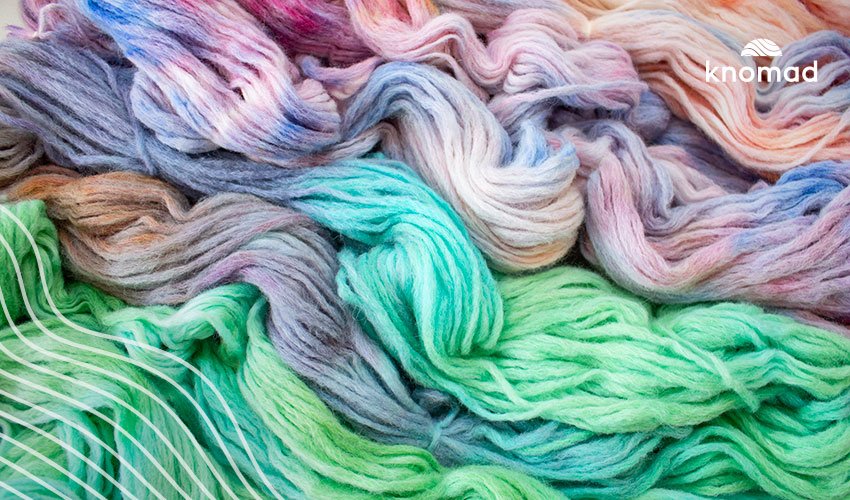

Dyeing a Cotton Candy Rainbow Cloud on Cirrus Superkid Mohair Silk
How to create a super soft rainbow on a cloud like base to maximize the halo effect
Featuring: Knomad Lace Cirrus 70% Super Kid Mohair, 30% Silk
Our Goal: Learn about the properties of mohair and silk, how to thoroughly whet this base to receive the dye, and how to maximize the halo to give a gorgeous ethereal rainbow whether knitted alone, or run with another yarn.
Stressed for time and want an abstract? Here ya go:
Abstract: We will learn about the characteristics of Mohair, Silk, and how to properly prepare it to receive the dye as well as different ways to use this base in your garment knitting. For those with time to read the finer details, let’s dive in!

 Mohair comes from the Angora Goat, a shaggy creature with a beautiful set of curls that have a natural shine to them. Super Kid Mohair, which the Cirrus base is 70% comprised of, is the first shearing of a baby goat. Since every subsequent shearing of the animal (usually twice a year in May and October) yields a thicker “strand”, the fiber gets more and more coarse as the animal ages. Kid mohair is next to the skin soft and has a natural silk-like shine to it. Adult grade mohair is fairly prickly and is better suited to outerwear.
 Silk comes from the coccoons of the silk worm. It is extremely soft and lustrous, and will add drape and shine to any project. Silk is naturally hydrophobic, meaning it will float in water and repel the dye unless properly prepared, which we’ll learn all about in this blog post! My favorite aspect of silk is the way that it reflects the dye. It is significantly more saturated and due to it’s lustre, the color literally shines and glows!
 Fill a large tub with 5 gallons of warm water, 1 teaspoon synthrapol and 1 teaspoon citric acid and soak the skeins overnight
 Here is some raw silk that I dyed without synthrapol, just a water soak overnight, to show how patchy and uneven the dye penetration is. If you want thorough penetration, you want Synthrapol. Not cheap dishsoap either, it’s not milled to be Ph neutral and there’s often fragrance, dye and other additives meant to “strip dish pan grease” that does not do nice things to the fiber. Plus, synthrapol is extremely concentrated, a bottle will last you years. Trust me, it’s a worthy investment.
Now that our Cirrus skeins are whetted out, squeeze out the excess water and lay in your tray, you want it just barely damp.
Here is some raw silk that I dyed without synthrapol, just a water soak overnight, to show how patchy and uneven the dye penetration is. If you want thorough penetration, you want Synthrapol. Not cheap dishsoap either, it’s not milled to be Ph neutral and there’s often fragrance, dye and other additives meant to “strip dish pan grease” that does not do nice things to the fiber. Plus, synthrapol is extremely concentrated, a bottle will last you years. Trust me, it’s a worthy investment.
Now that our Cirrus skeins are whetted out, squeeze out the excess water and lay in your tray, you want it just barely damp.

 I create a concentrated stock for hand painting consisting of 10 grams of dye and 1000 ml of water. For the cotton candy pastel rainbow, we need a tiny amount of dye powder. So small, it’s hard to measure. So instead, we measure it in dye stock per ml instead of dye powder per gram.
5 ml of dye stock per 500 ml of water is 0.05 grams of dye, which most scales aren’t accurate at that small an amount. Put a teaspoon of citric acid in each jar.
Here’s the painting recipe:
I create a concentrated stock for hand painting consisting of 10 grams of dye and 1000 ml of water. For the cotton candy pastel rainbow, we need a tiny amount of dye powder. So small, it’s hard to measure. So instead, we measure it in dye stock per ml instead of dye powder per gram.
5 ml of dye stock per 500 ml of water is 0.05 grams of dye, which most scales aren’t accurate at that small an amount. Put a teaspoon of citric acid in each jar.
Here’s the painting recipe:
 Let the painting begin!
To my eye, the reference image is heavily blush pink with notes of lavender, seafoam green and butter gold. Since I want the finished knit to work up with the same color balance, I’m keeping approximately 60% of the painting area dedicated to the peachy pink tones, and a small section in the middle of the skein for the yellow/green/blue/violet stripe.
Start in the middle with the hot pink stock for about 4 inches, then do a smaller strip of violet, about 2 inches, below that, followed by 2 inches of bright aqua, 2 inches of spearmint green, 2 inches of yellow and the bottom end is Aljo Lily Rose. Move back to the section above the pink and use the 50/50 mix of hot pink and lily rose for 4 inches, and the top end is finished with Lily Rose. That way, the color moves back and forth between peach and pink for half of the stitches before a small rainbow stripe and more pink, another rainbow stripe, back to the large pink section again. Imagine yourself going back to knit the skein, how each stitch moves in a circle through the skein. Reverse engineering our dye application to knit up the way we want it is a critical skill to build when dyeing for hand knitters.
Let the painting begin!
To my eye, the reference image is heavily blush pink with notes of lavender, seafoam green and butter gold. Since I want the finished knit to work up with the same color balance, I’m keeping approximately 60% of the painting area dedicated to the peachy pink tones, and a small section in the middle of the skein for the yellow/green/blue/violet stripe.
Start in the middle with the hot pink stock for about 4 inches, then do a smaller strip of violet, about 2 inches, below that, followed by 2 inches of bright aqua, 2 inches of spearmint green, 2 inches of yellow and the bottom end is Aljo Lily Rose. Move back to the section above the pink and use the 50/50 mix of hot pink and lily rose for 4 inches, and the top end is finished with Lily Rose. That way, the color moves back and forth between peach and pink for half of the stitches before a small rainbow stripe and more pink, another rainbow stripe, back to the large pink section again. Imagine yourself going back to knit the skein, how each stitch moves in a circle through the skein. Reverse engineering our dye application to knit up the way we want it is a critical skill to build when dyeing for hand knitters.

 As we can see, the colors are well balanced and we have a soft hazy color that primarily skews pink with tiny rainbow rivulets through the piece that don’t dominate and aren’t overly variegated or pooled. The yarn is airy, feather light and translucent.
 One thing I absolutely love is pairing a skein of Cirrus with another yarn (in this case, Snowdrift Select) to give more structure to the garment and to show off a different effect in the color. It becomes almost opalescent when doubled. I caked both skeins together to knit this sample:

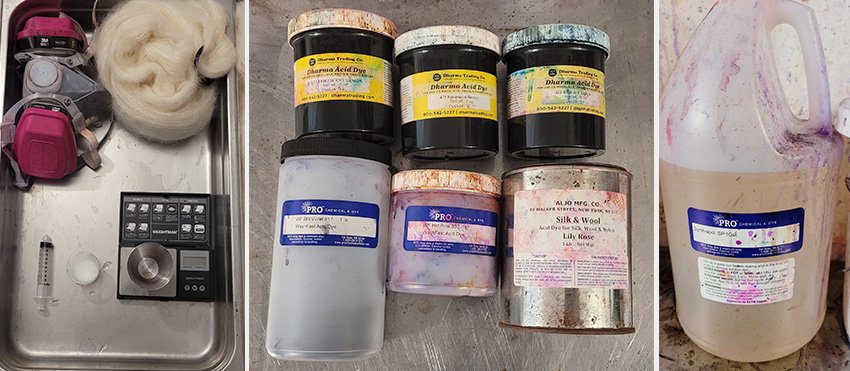
YOU WILL NEED:
- Cirrus Skeins
- Gloves
- Respirator
- A way to heat set your yarn (steamer, proofer, oven, induction plate)
- Acid-Reactive Dye in Dharma fluorescent orange, fluorescent lemon, bright aqua, spearmint breeze,. Pro Chem WFA Brilliant Violet, Hot Pink, Aljo Lily Rose
- 2.5” deep stainless steel restaurant tray
- Citric Acid
- Gram Scale
- Mililiter measuring jugs
- Glass pint jars
- Synthrapol Textile Detergent
- 10 ML syringe
- 60 ML syringe
What is Mohair?
Mohair comes from the Angora Goat, a shaggy creature with a beautiful set of curls that have a natural shine to them. Super Kid Mohair, which the Cirrus base is 70% comprised of, is the first shearing of a baby goat. Since every subsequent shearing of the animal (usually twice a year in May and October) yields a thicker “strand”, the fiber gets more and more coarse as the animal ages. Kid mohair is next to the skin soft and has a natural silk-like shine to it. Adult grade mohair is fairly prickly and is better suited to outerwear.
What is Silk?
Silk comes from the coccoons of the silk worm. It is extremely soft and lustrous, and will add drape and shine to any project. Silk is naturally hydrophobic, meaning it will float in water and repel the dye unless properly prepared, which we’ll learn all about in this blog post! My favorite aspect of silk is the way that it reflects the dye. It is significantly more saturated and due to it’s lustre, the color literally shines and glows!
Preparing the fiber:
Fill a large tub with 5 gallons of warm water, 1 teaspoon synthrapol and 1 teaspoon citric acid and soak the skeins overnight
What is Synthrapol (from www.prochemicalanddye.net)
A concentrated liquid wetting agent and surfactant compatible with all dye classifications.. May also be added to the dye bath to add levelness and aid in wetting out the fiber.- Will remove excess dye from hand dyed fabrics.
- Will remove sizing from fabric before dyeing.
- Use in the dye bath for even color.
- A concentrated wetting agent, known as a surfactant.
Here is some raw silk that I dyed without synthrapol, just a water soak overnight, to show how patchy and uneven the dye penetration is. If you want thorough penetration, you want Synthrapol. Not cheap dishsoap either, it’s not milled to be Ph neutral and there’s often fragrance, dye and other additives meant to “strip dish pan grease” that does not do nice things to the fiber. Plus, synthrapol is extremely concentrated, a bottle will last you years. Trust me, it’s a worthy investment.
Now that our Cirrus skeins are whetted out, squeeze out the excess water and lay in your tray, you want it just barely damp.
Dye Stock Recipe:
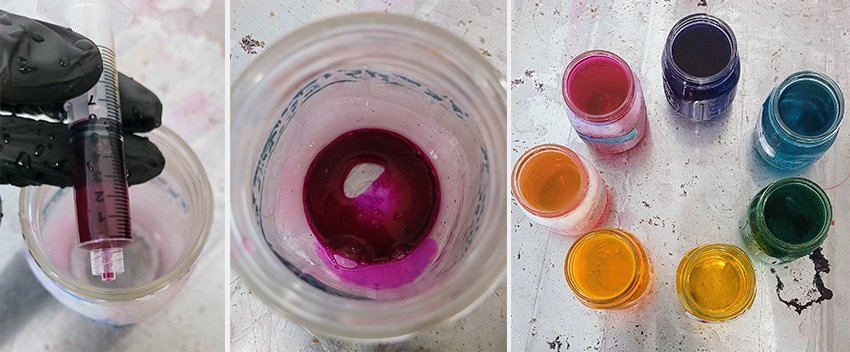 I create a concentrated stock for hand painting consisting of 10 grams of dye and 1000 ml of water. For the cotton candy pastel rainbow, we need a tiny amount of dye powder. So small, it’s hard to measure. So instead, we measure it in dye stock per ml instead of dye powder per gram.
5 ml of dye stock per 500 ml of water is 0.05 grams of dye, which most scales aren’t accurate at that small an amount. Put a teaspoon of citric acid in each jar.
Here’s the painting recipe:
I create a concentrated stock for hand painting consisting of 10 grams of dye and 1000 ml of water. For the cotton candy pastel rainbow, we need a tiny amount of dye powder. So small, it’s hard to measure. So instead, we measure it in dye stock per ml instead of dye powder per gram.
5 ml of dye stock per 500 ml of water is 0.05 grams of dye, which most scales aren’t accurate at that small an amount. Put a teaspoon of citric acid in each jar.
Here’s the painting recipe:
- Hot pink 5 ML painting stock in 500 ML water
- Brilliant Violet 2.5 ML painting stock in 500 ML water
- Aljo lily rose 5 ML painting stock in 500 ML water
- Fl yellow 5 ML painting stock in 500 ML water
- Bright aqua 5 ML painting stock in 500 ML water
- Spearmint breeze 5 ML painting stock in 500 ML water
- Hot Pink/Lily Rose 2.5 ml hot pink painting stock + 2.5 ML Lily Rose painting stock in 500 ML Water
Let the painting begin!
To my eye, the reference image is heavily blush pink with notes of lavender, seafoam green and butter gold. Since I want the finished knit to work up with the same color balance, I’m keeping approximately 60% of the painting area dedicated to the peachy pink tones, and a small section in the middle of the skein for the yellow/green/blue/violet stripe.
Start in the middle with the hot pink stock for about 4 inches, then do a smaller strip of violet, about 2 inches, below that, followed by 2 inches of bright aqua, 2 inches of spearmint green, 2 inches of yellow and the bottom end is Aljo Lily Rose. Move back to the section above the pink and use the 50/50 mix of hot pink and lily rose for 4 inches, and the top end is finished with Lily Rose. That way, the color moves back and forth between peach and pink for half of the stitches before a small rainbow stripe and more pink, another rainbow stripe, back to the large pink section again. Imagine yourself going back to knit the skein, how each stitch moves in a circle through the skein. Reverse engineering our dye application to knit up the way we want it is a critical skill to build when dyeing for hand knitters.
The Results:
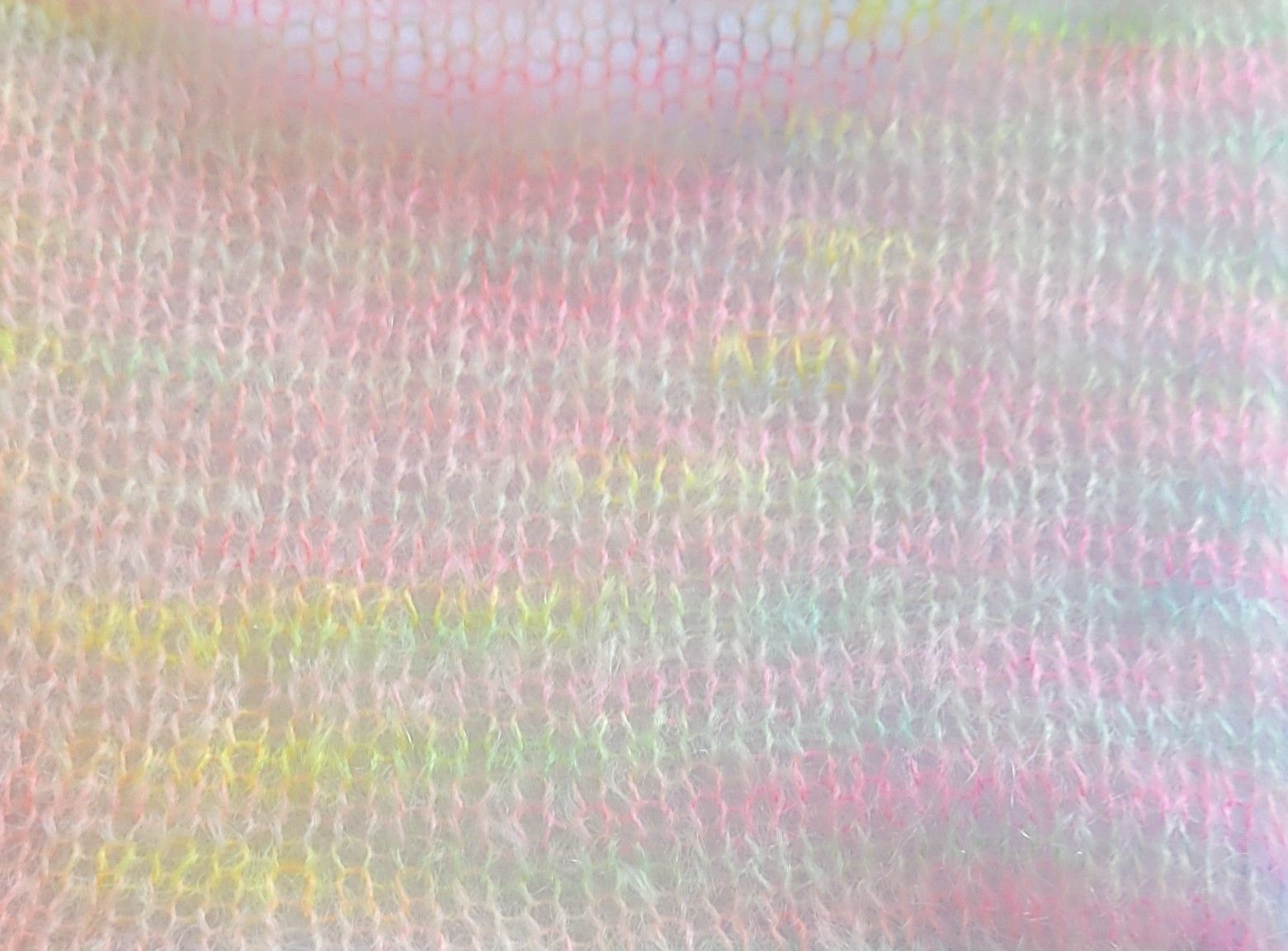
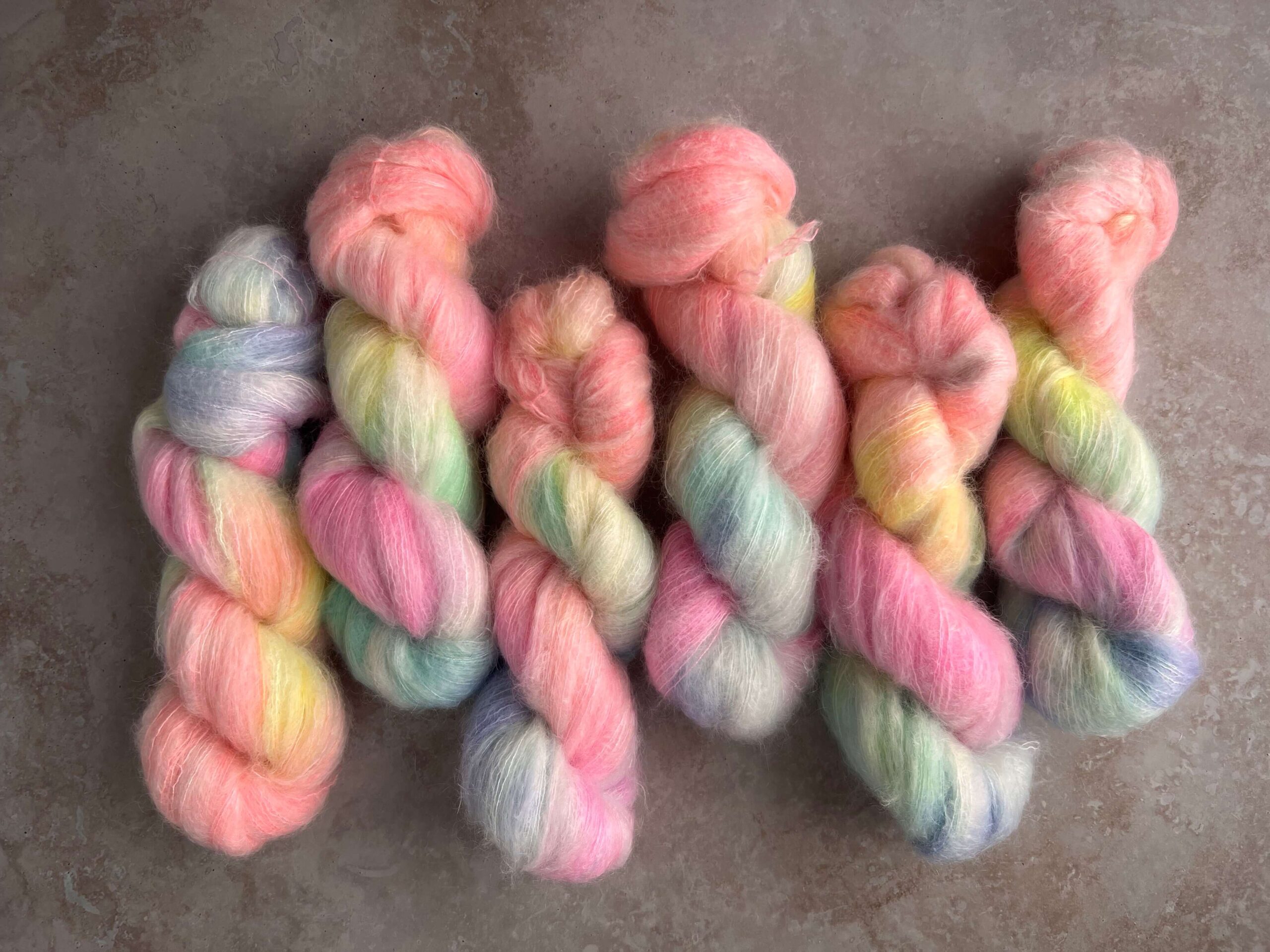 As we can see, the colors are well balanced and we have a soft hazy color that primarily skews pink with tiny rainbow rivulets through the piece that don’t dominate and aren’t overly variegated or pooled. The yarn is airy, feather light and translucent.
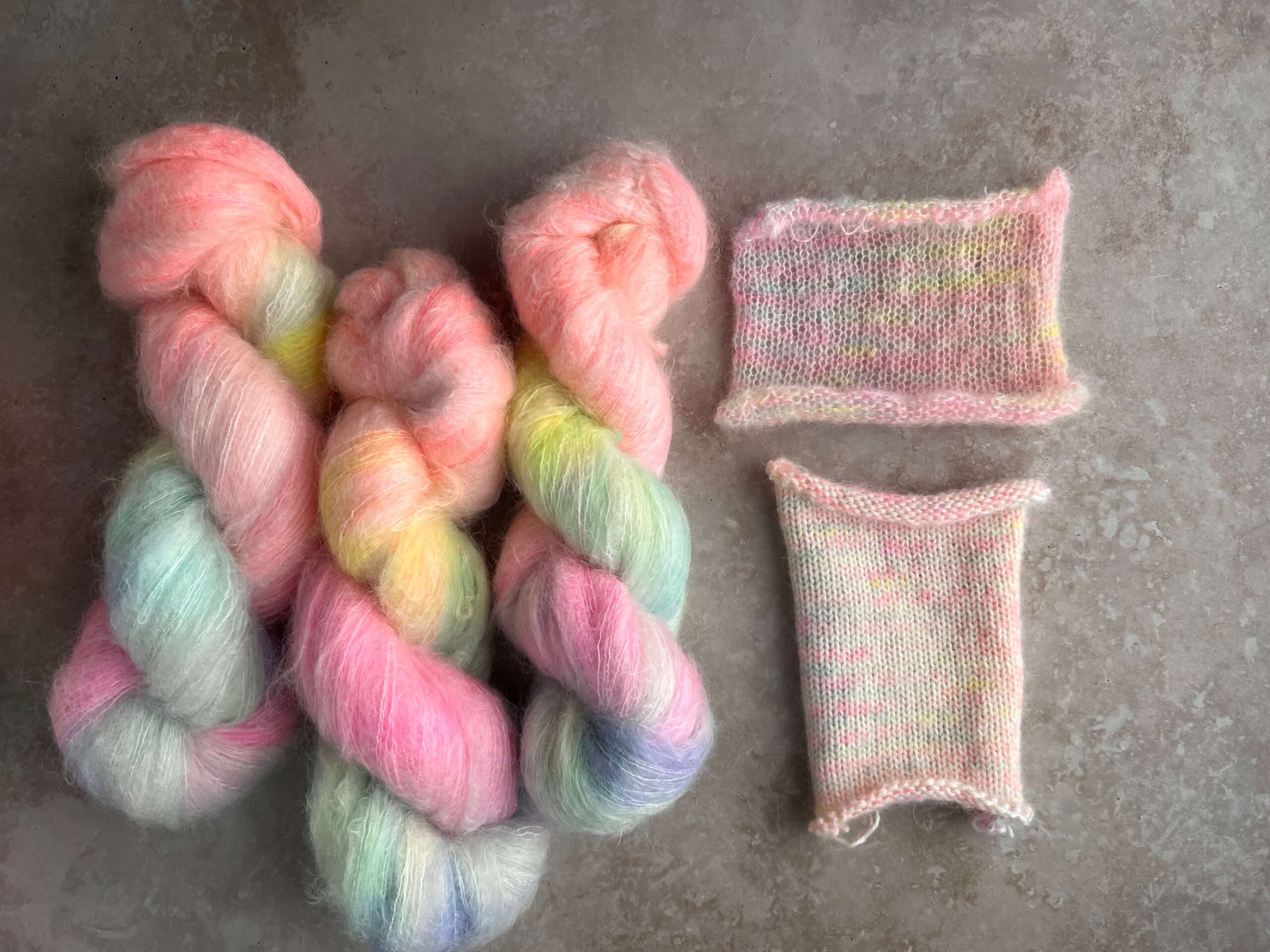 One thing I absolutely love is pairing a skein of Cirrus with another yarn (in this case, Snowdrift Select) to give more structure to the garment and to show off a different effect in the color. It becomes almost opalescent when doubled. I caked both skeins together to knit this sample:
Indirect Sunlight Direct Sunlight
Running a strand of Cirrus next to any semi solid or solid shade yarn will give a beautiful, opalescent halo to your garment and the warmth, softness, drape and shine cannot be overstated. I hope this blog post was informative about how to dye this beautiful yarn and gave you some helpful tips to get the desired effect! Til next time.