Featuring:
- Salcantay (superwash merino)
- Bristle (non superwash/hemp)
- Prism (superwash silk)
- Egg Shell (superwash nylon)
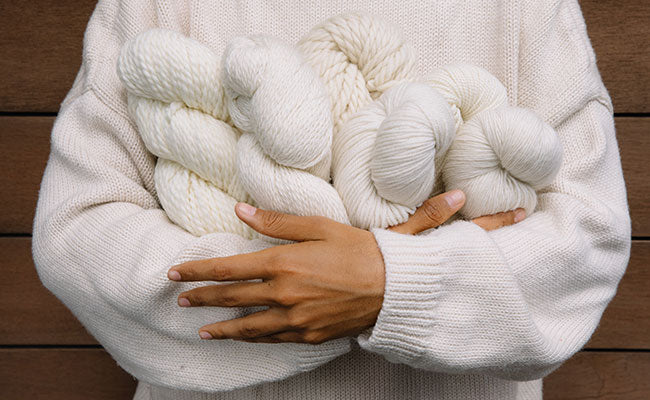
- Latte (baby alpaca)
Our goal:
To see how differently speckles land on a silk base, superwash nylon, superwash, non superwash/cellulose and
alpaca. We are also cross comparing the top 3 ways most dyers like to speckle: with their fingers, a cake dusting wand, and salt shakers.
Stressed for time and wanna get an abstract for your 5 minute work break?
Abstract:
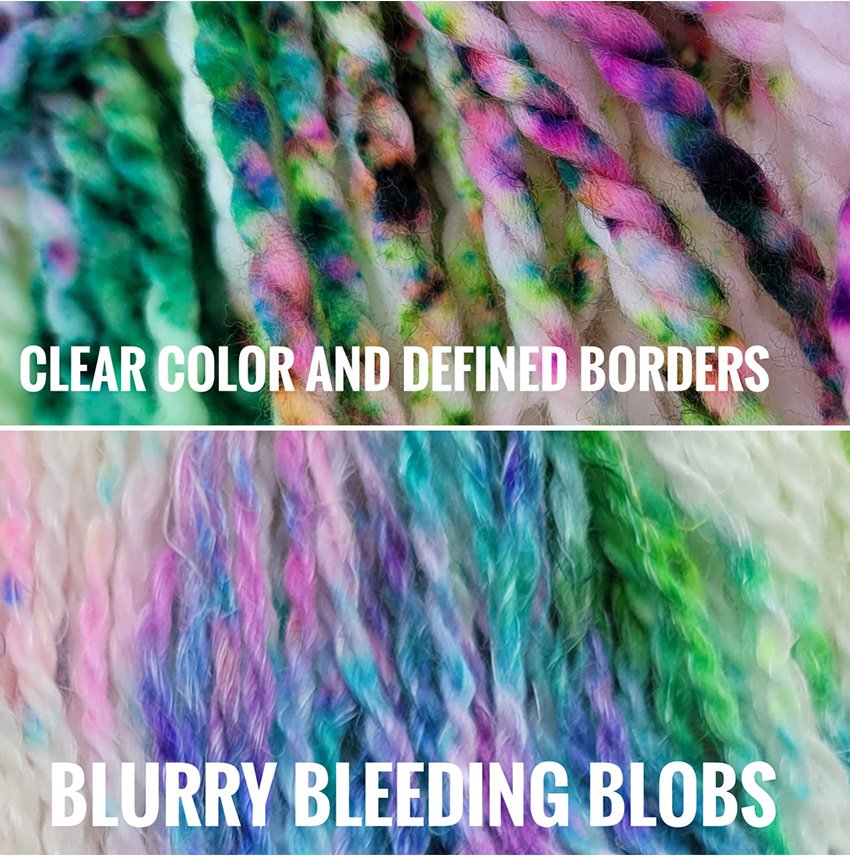
Different fibres refract light and have different fibre lengths/densities/micron diameter. Thus, not all bases speckle alike. Superwash and Superwash Nylon are the clear favorite for crisp speckles with minimal back bleeding. The worst base for speckling is a non superwash. Blotchy, blurry overmixed mess. Silk content and alpaca, while cute, are not suited to a
crisp speckle but it does look cute. This YouTube video is only 7 minutes long and will show everything we discuss in the blog post if your preferred learning style is watching it be done instead of reading it:

For those with time to read up on all the finer details, let’s dive in!
You will need:
- cake dusting wand
- salt shaker
- granular salt from restaurant supply
- citric acid
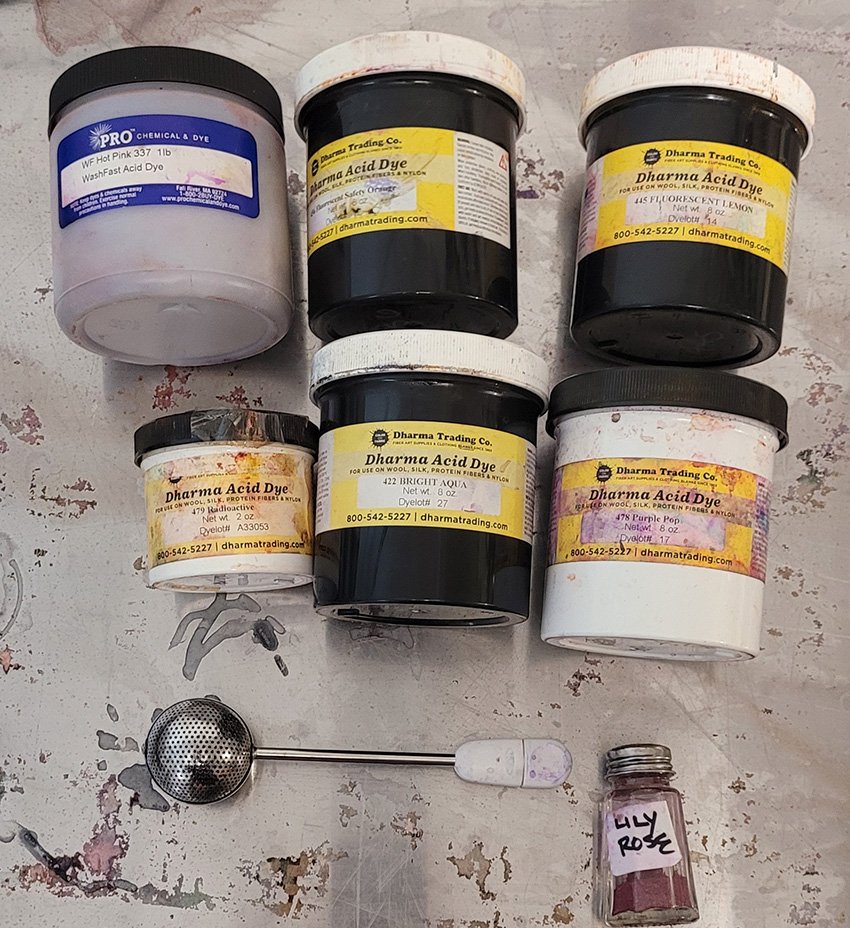
- rainbow acid dye (I used a mix of pro chem and dharma fluorescent dye)
- steamer, proofer or oven to heat set
- baking tray if using oven
- fine mist spray bottle
- gloves
- respirator

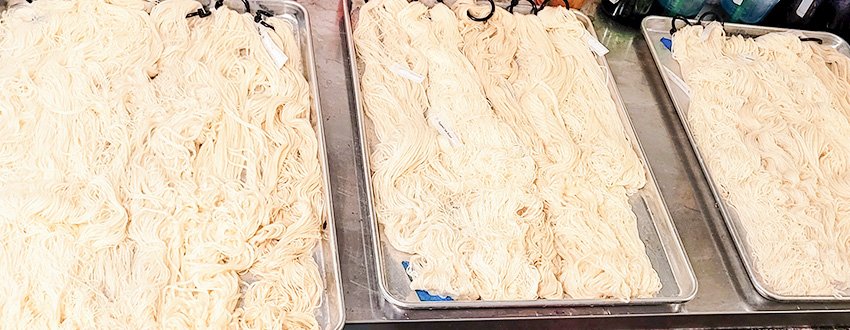
First things first: soak your yarn in a couple gallons of water, tablespoon of citric acid, and teaspoon of synthrapol. Synthrapol is a textile detergent milled to be PH neutral, that helps whet the fibres and grabs the dye easier. Especially silk, as silk is hydrophobic and will repel the water, leading to patchy results.
Gently drain the yarn until it’s barely damp (I use the drain and spin on my top loading washer) and lay out on a baking sheet or plastic wrap if you’re using a veggie steamer.

First up: Finger Speckling
Why speckle with the fingers? More control, and variation in the speckle size produces interesting effects in the knitted or crocheted sample.
This is how much dye you want between your finger and thumb: less than 1/8th teaspoon

Pinch the dye and gently move your fingers against each other, depositing the tiniest amount of dye from 12 inches above the yarn back and forth across the top 3 inches of the skein. Clean your gloves with a dry towel and dip into the orange, then yellow, then green, then blue, then purple.
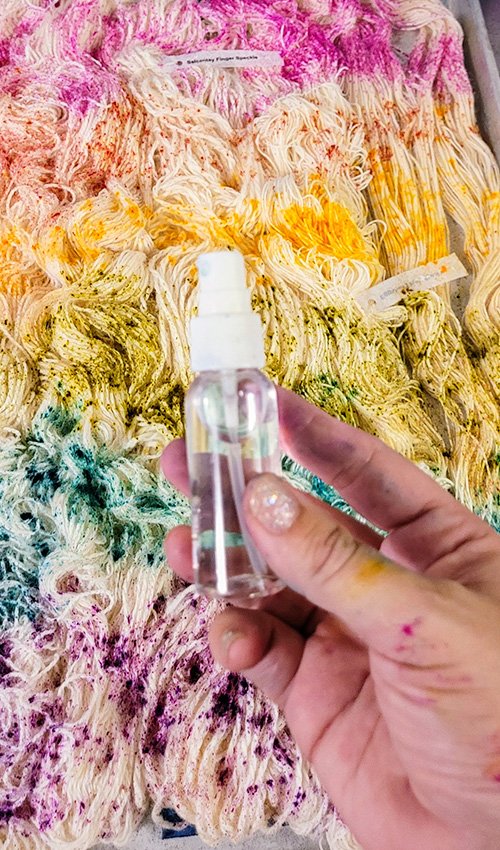
Now, we mix a teaspoon of citric acid in 60 ML of boiling hot water into a small mist bottle and spritz over the top of the yarn to “fix” the speckles in place and melt any pockets of dry dye powder. Heat set at 200 for 30 minutes, cool to room temperature and rinse.

Too much dye powder and you won’t have speckles, you’ll have a patchy mess. Less is more. Specifically, put down 30% the actual number of speckles you want, with the expectation that they’re gonna grow.
Next: Cake Dusting Wand

Lots of dyers love the cake dusting wand because it gives you an even drift of speckles and if used sparingly, can create some really stunning explosions of speckles. I personally find it is too heavy of a pour for my taste, even with just a pinch. Make sure you thoroughly clean the dusting wand between colors, dye powder can mix together and give you brown speckles if you don’t.
See how uniform and cute these speckles are?

Give it 5 minutes and it’s gonna look like this:

Finally: Salt Shaker Speckles
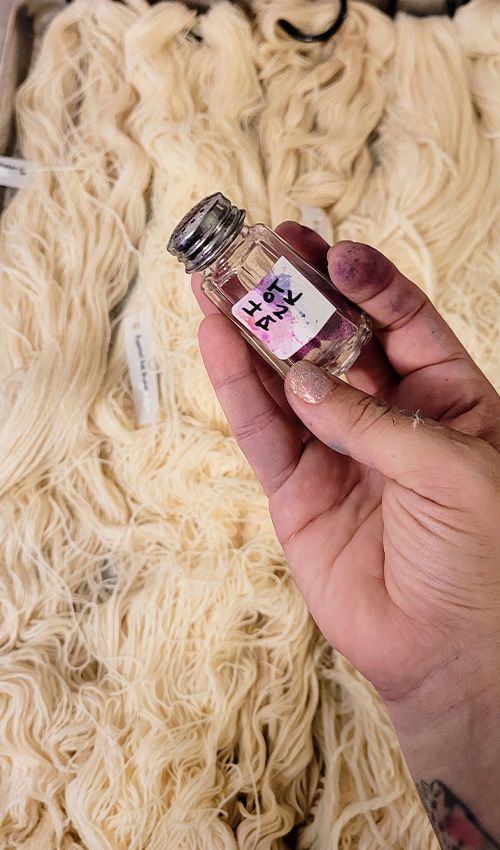
This is my favorite technique, because I like crisp, defined speckles with clear white space around it. I do a mix of 50% salt and 50% dye so the dye adheres to the salt and reduces the speckle margin and diameter. The density of some dye colors, like most yellows and hot pinks, is so heavy and cakey that it drops in a clump instead of a few grains of dye, thus creating pockets of pooling dye and water that blotch. Using the salt shaker reduces this occurrence and creates a more uniform speckle size.

Don’t forget to spray them down so they’re fixed in place!

THE RESULTS:
If you look at the top of the photo, the tags on the yarn state the base and the
speckle technique used. My favorite is the salt shaker speckles on the Salcantay superwash bulky base. What’s yours?
Latte:
 Prism:
 (Left Salt Shaker, Middle Cake Duster, Right Finger Speckle)
 Salcantay:
 (Left Salt Shaker, Middle Cake Duster, Right Finger Speckle)
 Bristle:
 (Left Salt Shaker, Middle Cake Duster, Right Finger Speckle)
 Eggshell:
 (Left Salt Shaker, Middle Cake Duster, Right Finger Speckle)

In conclusion: Not all bases take to every technique equally. Consider the micron (diameter) of your fibre and the fibre content. When in doubt, buy a couple test skeins and experiment to get the effect you’re going for!


 For those with time to read up on all the finer details, let’s dive in!
 First things first: soak your yarn in a couple gallons of water, tablespoon of citric acid, and teaspoon of synthrapol. Synthrapol is a textile detergent milled to be PH neutral, that helps whet the fibres and grabs the dye easier. Especially silk, as silk is hydrophobic and will repel the water, leading to patchy results.
Gently drain the yarn until it’s barely damp (I use the drain and spin on my top loading washer) and lay out on a baking sheet or plastic wrap if you’re using a veggie steamer.
First things first: soak your yarn in a couple gallons of water, tablespoon of citric acid, and teaspoon of synthrapol. Synthrapol is a textile detergent milled to be PH neutral, that helps whet the fibres and grabs the dye easier. Especially silk, as silk is hydrophobic and will repel the water, leading to patchy results.
Gently drain the yarn until it’s barely damp (I use the drain and spin on my top loading washer) and lay out on a baking sheet or plastic wrap if you’re using a veggie steamer.
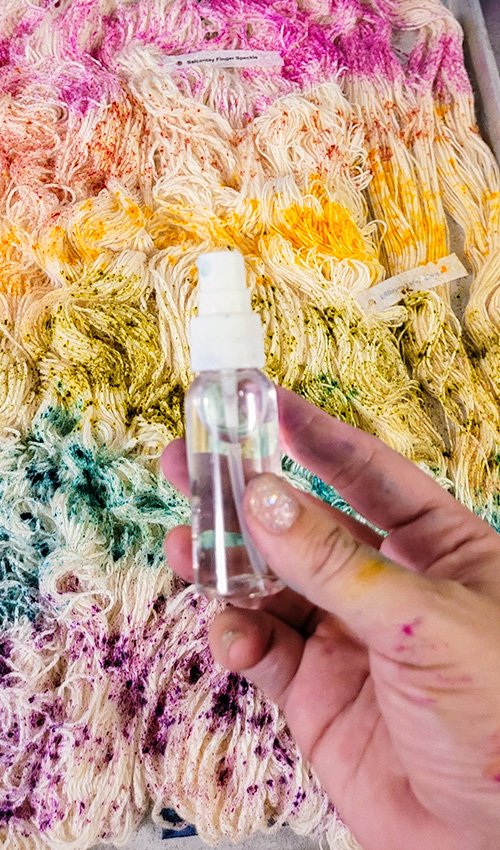 Too much dye powder and you won’t have speckles, you’ll have a patchy mess. Less is more. Specifically, put down 30% the actual number of speckles you want, with the expectation that they’re gonna grow.
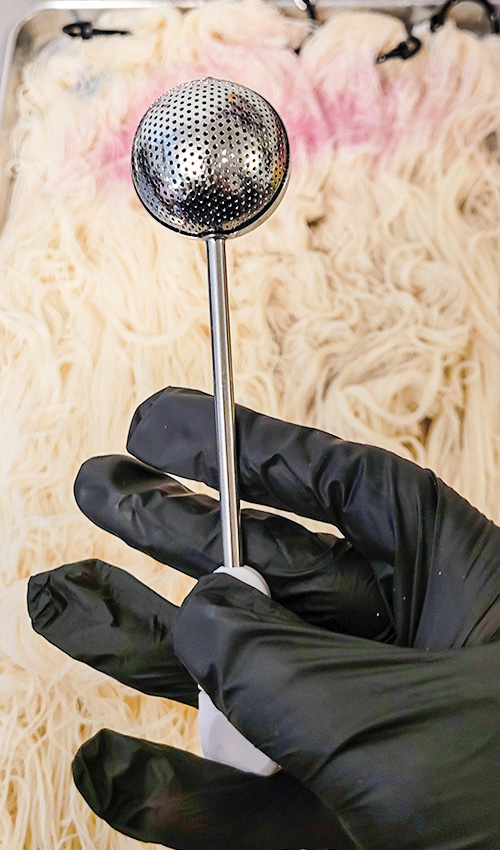 Lots of dyers love the cake dusting wand because it gives you an even drift of speckles and if used sparingly, can create some really stunning explosions of speckles. I personally find it is too heavy of a pour for my taste, even with just a pinch. Make sure you thoroughly clean the dusting wand between colors, dye powder can mix together and give you brown speckles if you don’t.
See how uniform and cute these speckles are?
Lots of dyers love the cake dusting wand because it gives you an even drift of speckles and if used sparingly, can create some really stunning explosions of speckles. I personally find it is too heavy of a pour for my taste, even with just a pinch. Make sure you thoroughly clean the dusting wand between colors, dye powder can mix together and give you brown speckles if you don’t.
See how uniform and cute these speckles are?
 Don’t forget to spray them down so they’re fixed in place!
%20%0A%20%09Bristle%20(non%20superwash/hemp)%0A%20%09Prism%20(superwash%20silk)%0A%20%09Egg%20Shell%20(superwash%20nylon)%0A%20%09Latte%20(baby%20alpaca)%0A%0AOur%20goal:%0ATo%20see%20how%20differently%20speckles%20l...)